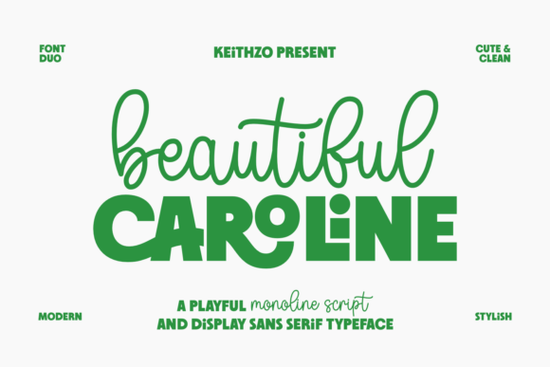
If you need a typeface that feels both relaxed and polished, Beautiful Caroline Font gives you a ready-made pairing that saves time during layout. The package includes a smooth monoline script and a sturdy display sans, which means you can handle headings, subheadings, and short body text without hunting for matching weights. Designers, print-on-demand sellers, and crafters often reach for this kind of duo when they want a friendly vibe that still looks professional on merchandise, invitations, and social graphics.
What makes this font duo work so well together?
The script keeps a consistent line weight, so it reads cleanly even when scaled down for stickers. Its curves feel hand-drawn without the uneven strokes that often cause printing issues. The companion sans brings geometric structure and slightly playful letterforms, grounding the layout so it never looks too delicate. Placed side by side, the contrast handles the visual hierarchy. You get clear interest without adding extra decorations.
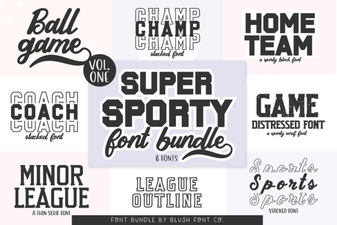
If you prefer working with other display styles for comparison, you might also browse options like chunky retro lettering when you need heavier impact, or test a collegiate-inspired typeface for sports-themed apparel. Each serves a different mood, but the balanced approach here stays versatile across seasons.
Which projects benefit most from this style?
This combination shines when you need a modern yet approachable look. Common uses include:
- Print-on-demand products: T-shirts, tote bags, and mugs where the script handles the main phrase and the sans supports sizing or location text.
- Small business branding: Shop banners, thank-you cards, and packaging labels that require a consistent voice across materials.
- Digital templates: Canva layouts, Pinterest pins, and Instagram story frames that need quick hierarchy without custom illustration.
- Craft cutting files: Vinyl decals and paper crafts where clean paths and predictable spacing reduce weeding time.
When your audience expects something friendly but not childish, this pairing hits that middle ground. It also works nicely alongside simpler graphics like line icons, basic shapes, or light textures.
How do you pair and format these letters for clean results?
Start by letting the script carry the main message. Keep it to one or two lines so the curves stay legible. Use the display sans for supporting details like dates or short descriptors. Increase the tracking slightly on the sans when it sits beneath the script to create breathing room. Stick to two or three colors. A dark charcoal for the sans and a muted accent for the script usually reads better than bright neons on fabric or matte paper.
If you experiment with other playful typefaces later, compare how soft inflated lettering behaves on curved surfaces, or how a hand-drawn bounce style changes layout rhythm. Testing alternatives helps you understand spacing before finalizing a product line. You can also review the full typeface showcase to preview extra glyphs and layout examples.
What should you check before adding a new font to your toolkit?
Not every typeface includes the same file types or licensing terms, so a quick review saves headaches later. Look for these basics:
- File formats: OTF and TTF cover most design software and cutting machines.
- Glyph coverage: Check for uppercase, lowercase, numbers, and common ligatures.
- Commercial license: Verify whether the purchase covers physical products or digital downloads.
- Installation notes: Restart your design program so the software registers the family correctly.
Keeping a simple folder structure for your typography assets also speeds up workflow. Group scripts, sans serifs, and display fonts separately, and name files clearly so you can find them during tight deadlines.
Ready to test it on your next design?
Follow this quick checklist before exporting your final artwork:
- Install both the script and sans files, then restart your design software.
- Type a short headline and adjust the tracking until the edges align visually.
- Check readability at actual print size, especially for fine script curves.
- Verify your license covers the intended use, whether digital or physical.
- Export a test mockup and review contrast on both light and dark backgrounds.
Once the layout holds up on screen and paper, you can roll it out across your product range with confidence. Save your spacing settings as a style preset so future projects take half the time.
Get Started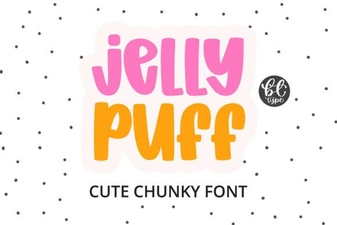 Creative Projects Using Jelly Puff Font
 Crafting with the Gemstone Font Design Tool
 Super Sport Bundle Font: Design & Usability Guide
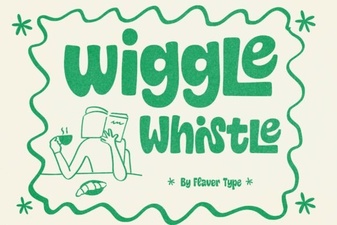 The Wiggle Whistle Font: Design Inspiration Guide
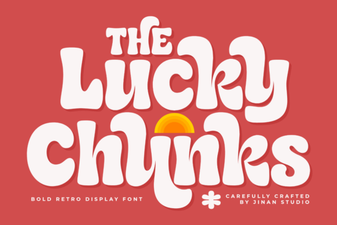 Lucky Chunks Font: Fun & Easy Gameplay Typography
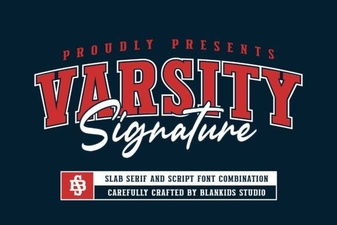 Design Your Team Spirit with Varsity Signature